

Is the Abortion Pill in Our Drinking Water?
Mifepristone has become the most common method of abortion in the United States. Now, a new study is raising concerns that its impact may extend beyond the women who take it. A new peer-reviewed study has found traces of the abortion pill in United States drinking water, in samples collected from tap water and environmental water sources in three US cities.
Abortion pill abortions accounted for 63% of the total abortions in 2023, equaling about 642,700 procedures in the United States. The abortion pill is a regimen of two pills given to a woman to take at home, the first being a drug called mifepristone. Mifepristone blocks progesterone, a key hormone needed by the body to sustain pregnancy. When taken, the uterine lining begins to break down, cutting off the blood supply to the baby, which cuts off nutrients and oxygen.
Pro-life groups have long raised concerns about mifepristone being in the water, both for environmental and fertility reasons.
Progesterone is an essential hormone needed to sustain a healthy pregnancy. Having low progesterone can make conception more difficult because the uterine lining isn’t “sticky” enough to sustain a healthy pregnancy. Additionally, low progesterone can cause early miscarriages in women. It is often called the “pro-gestation” hormone. Besides maintaining the uterine lining, it also relaxes the muscles of the uterus, preventing contractions, and stops the mother's immune system from attacking the developing fetus.
Some women, when working with their doctors, are able to supplement progesterone when there is a known history of low progesterone causing infertility or early miscarriage. The question remains then, why are so many women experiencing low progesterone? We don’t know the exact number of early miscarriages that are caused by low progesterone, but we do know that about 1 in 4 pregnancies will end in miscarriage. While there is currently no evidence that mifepristone in the water is impacting women’s progesterone, it is not an unreasonable question to ask if there may be a correlation.
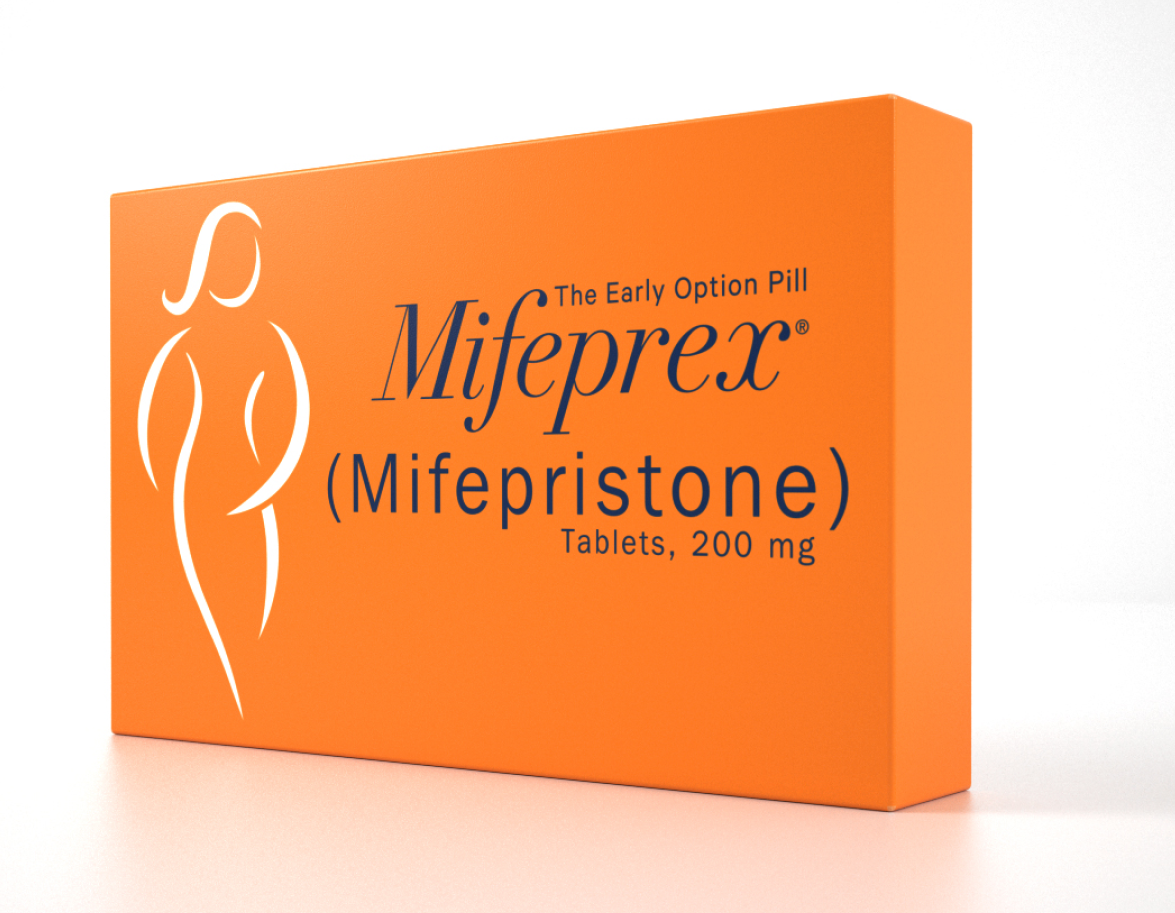
Mifepristone is the only drug on the market that has the 3 anti-progesterone metabolites found in the water samples. Many pharmaceuticals will enter a state of “inactivity” in the body, but mifepristone does not, instead undergoing liver metabolism to form three distinct metabolites that remain highly biologically active.
(https://www.ncbi.nlm.nih.gov/books/NBK557612/)
So how exactly is the drug entering the water system? When women are given the abortion pill, they are instructed to sit on the toilet or in their bathtub when having the abortion, flushing everything into the wastewater system. Mifepristone remains active in the blood and placental tissue, instead of reaching an inactive state like most other pharmaceuticals.
The study collected water samples upstream and downstream of water treatment facilities, as well as from household taps. The samples were collected in Austin, Texas; Blacksburg, Virginia; and Carbondale, Illinois. In all but one of the nine sampling categories, levels of mifepristone up to 0.041 micrograms per liter (41 parts per trillion) were detected. Conventional water treatment did not consistently remove the compound.
41 parts per trillion is not an insignificant number. In fact, the EPA has a set limit of 4.0 parts per trillion as the enforceable maximum contaminant level for certain forever chemicals. The EPA is currently evaluating whether to place mifepristone on its Contaminant Candidate List under the Safe Drinking Water Act.
Politicians are beginning to join forces to ask the EPA to take this matter into urgent consideration, especially in light of these new findings. Several Indiana politicians have signed letters urging the EPA, including Attorney General Todd Rokita, Senator Jim Banks, and House members Marlin Stutzman and Mark Messmer.
The discovery of mifepristone and its active metabolites in American drinking water does not answer every question, but it raises important ones. If a drug specifically designed to block progesterone is making its way through wastewater treatment systems and into tap water, the public deserves to know what effect, if any, that exposure may have on human health and the environment.
While abortion advocates cry “my body, my choice,” when a drug designed to end the life of an unborn child is detected in drinking water across multiple communities, it is reasonable to ask whether its effects truly end with the woman and unborn baby.
At a minimum, these findings demonstrate the need for additional testing, independent research, and greater transparency. Americans have a right to know what is in their drinking water. As the use of chemical abortion continues to rise, so too does the importance of understanding its broader consequences, not only for the women who take the drug, but for communities at large.